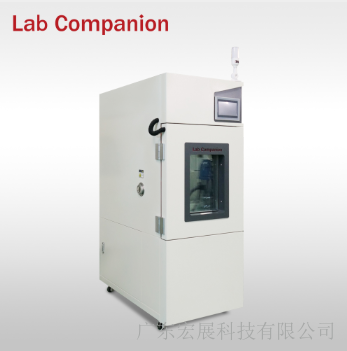
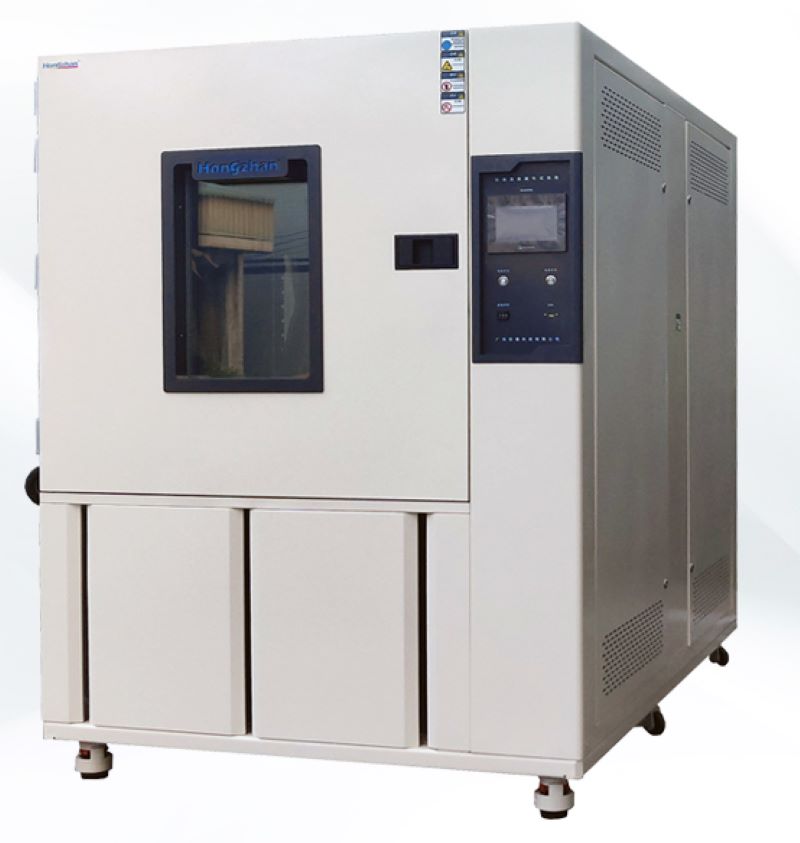
In recent years, the iteration speed of core components of AI servers has been accelerating, and the heat load has risen sharply. Taking an AI server equipped with 8 high-end GPUs as an example, its peak power consumption easily exceeds 10kW, and the power density of high-density cabinets soars to more than 50kW or even 100kW, with heat output 3 to 5 times higher than that of traditional servers. More importantly, modern high-load clusters are not the occasional periodic peaks in traditional data centers, but continuous heat generation brought by high-intensity continuous operation. When the hardware operating temperature reaches the critical safety threshold of 85°C to 90°C, the GPU will automatically start the "thermal throttling" self-protection program to cool down by sharply reducing the core frequency, which directly leads to a significant attenuation of computing power, a drop in operating efficiency of up to 25%, and an unlimited passive extension of model training time, seriously restricting the efficiency of AI R&D and application landing.
The drawbacks of traditional environmental reliability testing solutions have been fully exposed in this context. Limited by the cavity volume and heat load capacity, traditional testing equipment cannot accommodate the entire AI server/rack system at all, nor can it simulate the dense heat generated during the actual operation of GPU clusters, failing to meet the full-scenario reliability verification needs of AI equipment. Under this premise, a walk-in rapid temperature change test chamber with high load capacity and accurate environmental simulation capabilities has become an essential key equipment in the R&D and mass production verification links of AI servers, and even a core support for solving the contradiction between computing power and heat dissipation.
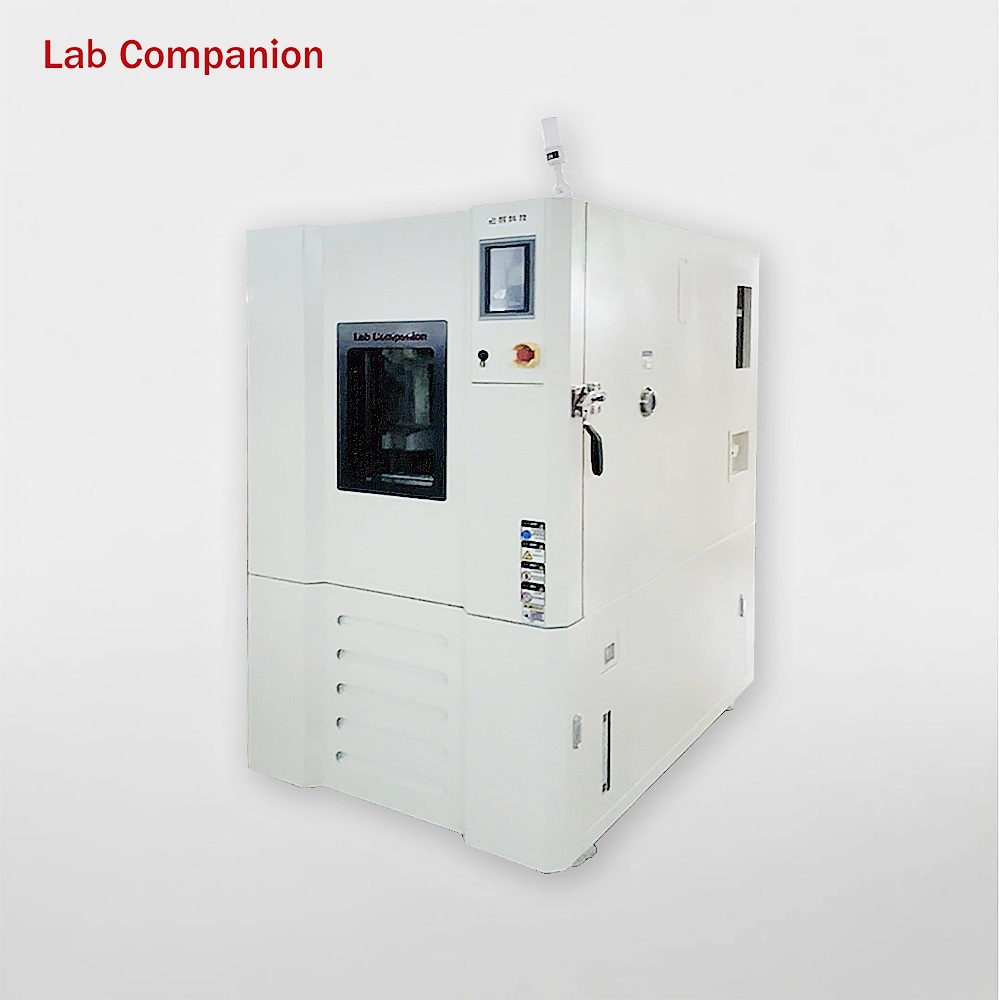
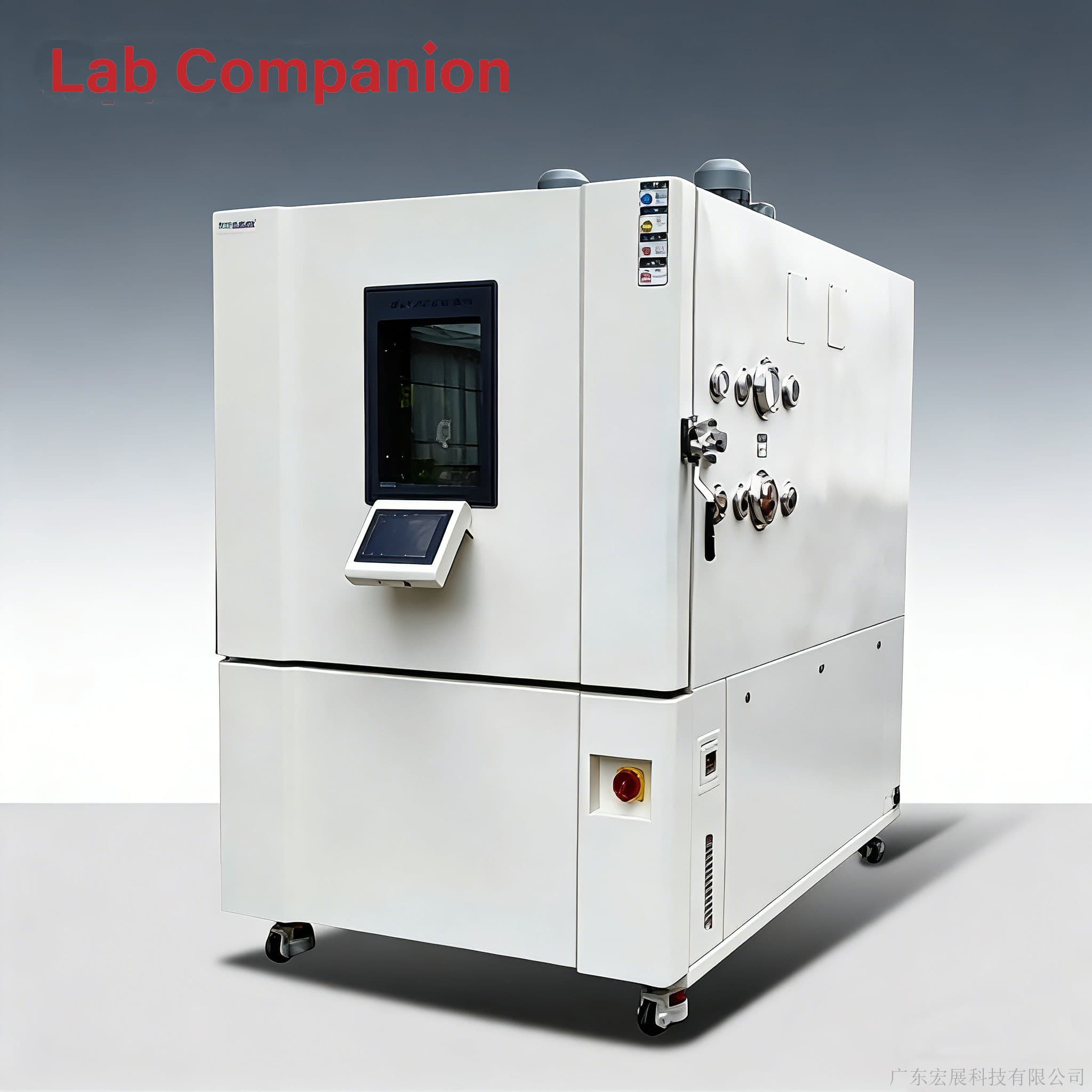
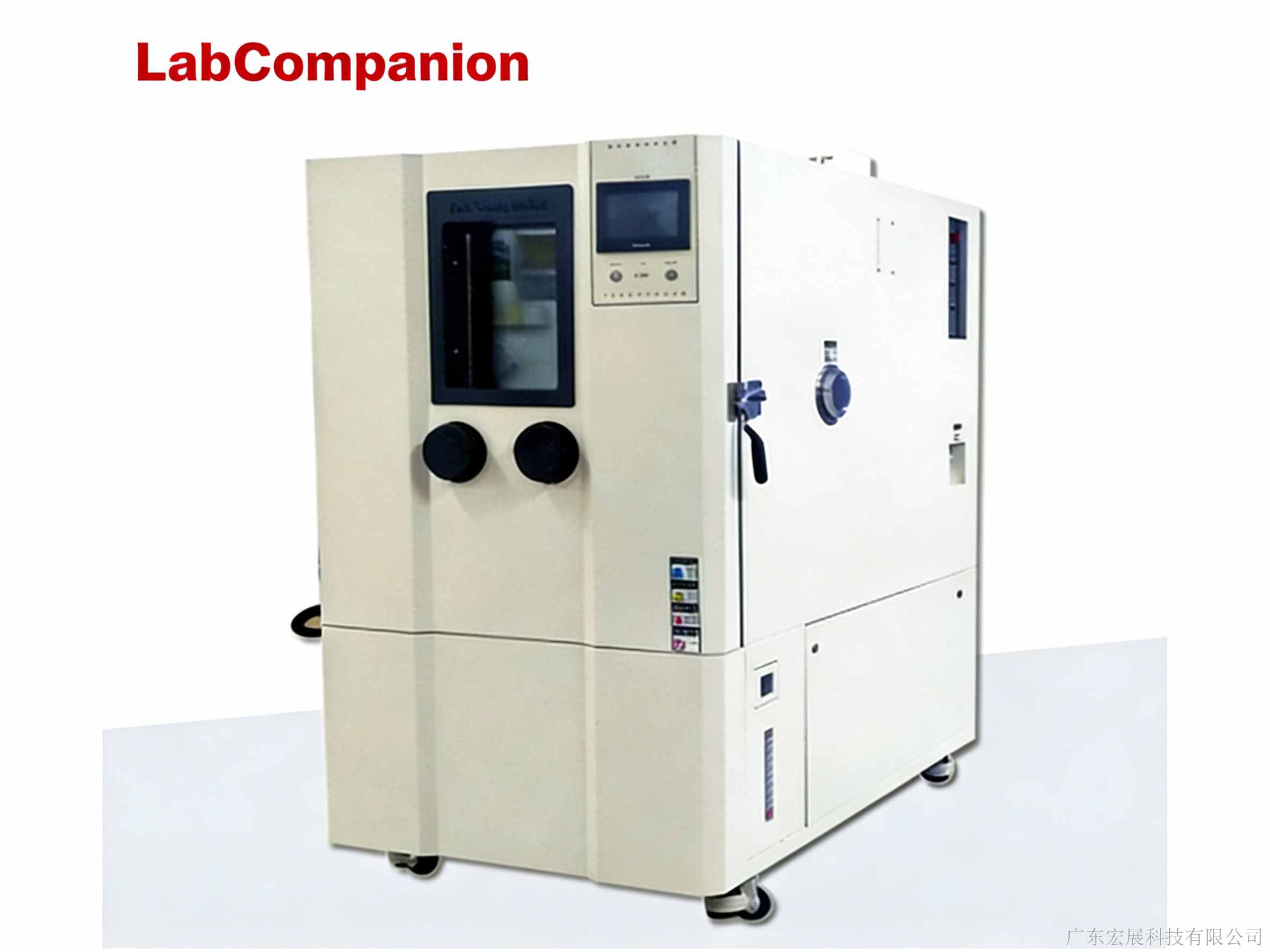
Precisely Adapted to AI High-Heat Testing: Lab Companion Walk-in Rapid Temperature Change Environmental Chamber
As a "leader in domestic scenario adaptation" with more than 20 years of experience in the field of environmental reliability testing equipment, Lab Companion, in conjunction with the advanced technical standards of France's Jielong, based on China's strong local R&D and manufacturing capabilities, has launched a high-heat, high-load Walk-in rapid temperature change environmental chamber specifically designed for large-scale high-power equipment testing, which accurately matches the testing needs of the AI computing era.
Large Capacity + High Load, Easily Undertaking AI Whole-Rack Testing
Traditional testing solutions are generally limited by equipment load capacity, making it difficult to restore the real heat generation environment of AI servers under full load, resulting in a disconnect between test results and actual application scenarios. Lab Companion's walk-in environmental chamber has achieved a major technological breakthrough — it can simultaneously carry 1000kg of aluminum ingots and a heat load of up to 50kW for testing, and the load capacity can be flexibly expanded according to the customer's actual testing needs. Whether it is an entire rack of AI servers, GPU cluster cabinets, or high-power communication equipment whole-system, the environmental chamber can easily accommodate them with its "super large capacity", eliminating the need to build additional testing platforms, greatly simplifying the testing process, and improving testing efficiency and accuracy.
Indirect Refrigeration System, Achieving Dual Breakthroughs in Energy Saving and Precision
In terms of energy consumption control and testing accuracy, the environmental chamber is equipped with an advanced indirect refrigeration system, which not only strictly controls the temperature and humidity uniformity within ±2K and the temperature and humidity fluctuation within ±1K during the test to ensure the accuracy and reliability of test data, but also reduces energy consumption by more than 50% compared with traditional refrigeration methods. Long-term use can save customers a lot of energy costs, truly achieving a win-win situation of environmental and economic benefits, and adapting to the needs of enterprises' green development.
Wide Temperature Range and High Precision Control, Adapting to Diversified Industry Standards
The equipment's temperature testing range covers -70℃ to +150℃, and the humidity range covers the standard 20~98%RH (the low-humidity type can be expanded to 5~98%RH), which can meet the diverse testing scenario needs of different AI equipment. The rapid temperature change series supports linear or non-linear temperature change rates from 5℃/min to 25℃/min, and can be equipped with a liquid nitrogen auxiliary refrigeration system to increase the cooling rate to 30℃/min, efficiently simulating extreme temperature change environments. The overall design strictly follows the GB/T 2423.2-2008 high-temperature testing standard, and also meets the latest industry standards such as T/UNP 538-2025, ensuring that the test results are authoritative and universal.
Intelligent Control System, Easy Operation and Full-Process Traceability
The equipment is equipped with the Q8 series intelligent controller, which supports multi-segment program editing, precise temperature and humidity calculation and full-process data recording. It is easy to operate and understand, without cumbersome operations by professional personnel. The entire testing process is traceable, facilitating customers to review test data and optimize test plans. In addition, the environmental chamber can seamlessly conduct joint debugging and testing with new heat dissipation solutions such as liquid cooling, and supports external CDU thermal management equipment, helping whole-machine manufacturers accurately verify the reliability of products under different heat dissipation solutions, quickly find thermal design shortcomings, and then optimize the system thermal management plan to enhance the core competitiveness of products.
Laying a Solid Foundation for Computing Power Breakthroughs, Empowering the High-Quality Development of the AI Industry
Heat is the natural enemy of computing power and a key bottleneck restricting the sustainable development of the AI industry. Lab Companion's high-heat walk-in environmental chamber is precisely the underlying supporting force in the AI computing era — it can not only help enterprises accurately verify the operational stability of AI equipment under extreme heat loads, but also enable the new generation of computing power products to have "temperature resistance for real application scenarios" before they are launched, reducing product failure risks from the source, shortening the R&D cycle, and accelerating product mass production and landing.
Up to now, this series of products has been successfully applied in intelligent computing centers in many countries and regions in the Asia-Pacific. With stable operation performance, accurate testing capabilities and flexible scenario adaptability, it has won wide recognition and high evaluation from industry customers. In the future, with the continuous iteration of AI technology, computing power will be further upgraded, equipment power consumption and heat density will continue to increase, and testing requirements will become more stringent. Lab Companion will continue to deepen its presence in the field of environmental testing equipment, focus on AI computing power testing scenarios, continuously optimize product performance and iterate technical solutions, and contribute domestic strength to the breakthrough development of global AI computing power.
Product Positioning: Exclusive for Semiconductor Chip Testing, Adapt to Extreme Temperature Changes from -70℃ to +150℃
Nowadays, semiconductor chips are accelerating iteration towards high integration, high computing power and miniaturization. The reliability test standards for high-end chips (including 5G communication chips, automotive-grade chips, radio frequency chips, etc.) continue to upgrade, imposing extremely stringent requirements on the extreme temperature change adaptability and temperature control accuracy of test equipment. Such high-end chips need to undergo hundreds of temperature change cycle tests in the ultra-wide temperature range of -70℃ to +150℃, simulating extreme working environments to accurately screen potential defects such as bonding wire fatigue, package delamination and performance attenuation, ensuring the long-term operational stability of chips.
However, conventional rapid temperature change equipment on the market generally has shortcomings such as insufficient temperature range coverage, low temperature control accuracy and poor scenario adaptability, making it difficult to meet international authoritative test standards such as JEDEC JESD22-A104, which directly restricts the R&D iteration and mass production progress of semiconductor chips. Focusing on the environmental testing equipment field and targeting industry pain points accurately, Lab Companion has launched an exclusive rapid temperature change test chamber for semiconductor chips. With its ultra-wide temperature range of -70℃ to +150℃ and high-precision temperature control performance, it perfectly adapts to the stringent test requirements of various semiconductor chips.
Customized Core Parameters, Precisely Matching the Rigid Needs of Semiconductor Testing
Lab Companion special rapid temperature change chamber for semiconductors is polished with all-dimensional core parameters around the characteristics of semiconductor chip testing, taking into account stability, accuracy and practicality, and fully conforms to the test standards of high-end chips:
• Ultra-wide Temperature Range Coverage: The basic temperature range covers -70℃ to +150℃, and can be flexibly expanded to -70℃ to +220℃. It is fully suitable for multiple scenarios such as -40℃~+150℃ cycle test of automotive-grade chips, ultra-low temperature test of radio frequency chips, and high-temperature aging test of advanced packaging chips, with no shortcomings in temperature range adaptation.
• Adjustable Temperature Change Rate + High-precision Temperature Control: The temperature change rate is freely adjustable from 5 to 20℃/min. Low-speed temperature change can be set for precision chips to avoid damage to the internal structure of chips caused by rapid temperature change; the temperature control accuracy reaches ±0.3℃, and the temperature uniformity in the chamber is ≤±0.5℃, fully in line with the international standard of JEDEC JESD22-A104. It can accurately capture the subtle performance fluctuations of chips during temperature change, ensuring the authenticity, reliability and traceability of test data.
• Exclusive Protection Design: Equipped with nitrogen replacement function, it can accurately control the low-oxygen environment in the chamber, effectively avoiding problems such as oxidation, condensation and corrosion during chip testing, protecting precision chips in all directions and ensuring the smooth progress of the test process.
Special Scenario-based Design, Adapting to Diverse Semiconductor Test Conditions
Based on the special process requirements of semiconductor chip testing, Lab Companion has created a full-process customized service, optimized the equipment structure and functional configuration, solved the industry problem of poor adaptability of traditional equipment, and covered multi-scenario test needs:
• Linkage Test Adaptation: Optimize the internal layout of the chamber and reserve standardized probe station interfaces, which can be directly connected to the chip test probe station to realize linkage testing without additional equipment modification, solving the pain points of incompatible interfaces and unreasonable layout, simplifying the test process and improving test continuity.
• Anti-interference Optimization: Built-in electromagnetic shielding module, which effectively isolates external electromagnetic interference, ensures stable signal transmission during chip testing, eliminates external factors interfering with test data, and guarantees accurate and error-free test results.
• Flexible Models + Intelligent Control: Launch compact small-capacity models such as 200L and 300L, suitable for small-batch R&D testing and sample verification of semiconductor chips; equipped with a 7-inch intelligent touch screen, supporting the storage of more than 200 sets of test programs, enabling rapid switching of test parameters within 45 seconds, adapting to the test needs of chips of different specifications and models, and greatly improving test efficiency.
Verified by Leading Enterprises, Helping Reduce Costs and Improve Efficiency in Chip R&D
With its robust performance, Lab Companion special rapid temperature change chamber for semiconductors has become the core test equipment for leading semiconductor enterprises in China and globally such as Hisilicon and SMIC, and has implemented multiple measured cases, effectively helping enterprises solve test problems and speed up R&D and mass production:
After a 5G chip enterprise was equipped with Lab Companion equipment, the full temperature range cycle test time from -40℃ to +150℃ was shortened to 30 minutes, the test efficiency was increased by 4 times, and the original 4-day test task could be completed in 1 day. The temperature control deviation was ≤±0.3℃, the test data fully met the standards, and it passed the JEDEC international certification at one time, avoiding rework loss and reducing test costs.
An automotive-grade MCU chip enterprise selected the 20℃/min rapid temperature change model, which can complete temperature switching in 2 minutes, with the temperature control accuracy stably maintained at ±0.3℃. Combined with the nitrogen replacement function to eliminate condensation, the test cycle was completed 15 days in advance, helping the chip pass the AEC-Q100 automotive-grade certification smoothly, and the chip package defect rate dropped below 0.05%, greatly improving product yield.
Supported by Authoritative Standards, Escorting Global Layout of Products
Lab Companion semiconductor rapid temperature change chamber strictly complies with many international and China’s authoritative test standards such as IEC, GB/T and JEDEC, and has passed CNAS calibration certification. The equipment test data is globally recognized and can be directly used for product compliance certification and overseas market access audit, helping semiconductor products go global easily.
At the same time, Lab Companion has built a global service system. Relying on global service outlets, it provides full-cycle technical support including 2-hour rapid response and dedicated on-site technical assignment. It is equipped with a professional semiconductor test technical team, which can customize personalized test solutions according to customers' exclusive test needs, helping semiconductor enterprises improve product reliability and seize core competitiveness in the global market.
In environmental simulation testing, high-speed temperature control equipment is essential for verifying product reliability under extreme temperature variations. Guangdong Labcompanion Technology’s fast temperature change test chamber and thermal shock test chamber, both featuring high-speed temperature control, serve aerospace, military electronics, automotive new energy and other stringent industries. Though similar in core function, they have distinct principles and applicable scenarios.
Common Features
Both chambers are engineered to simulate extreme temperature fluctuations, supporting R&D and military testing. They meet international and domestic standards including GJB, MIL-STD, IEC. Fitted with Labcompanion’s intelligent control system, they enable curve programming, data export and remote monitoring. Built with robust structures and high-efficiency heating/cooling systems, some models adopt eco-friendly R404A refrigerant.
Core Differences
Item
Fast Temperature Change Test Chamber
Thermal Shock Test Chamber
Working Principle
Single-chamber, continuous & smooth gradual temperature change
Two/three-zone switching, instantaneous shock via rapid sample transfer
Key Parameters
Adjustable rate: 5–20℃/min; Temp range: -70℃–180℃; Supports humidity control
Temperature difference >150℃; Sample transfer time ≤10s; Fixed shock mode
Application Scenarios
Gradual temperature change tests for new energy batteries, automotive electronics, consumer electronics
Instant temperature shock tests for aerospace components, military equipment, automotive glass
Applicable Standards
IEC 60068-2-38, GB/T 2423.22
IEC 60068-2-14, MIL-STD-810H
Selection Recommendations
No absolute superiority exists between the two models. Select the fast temperature change chamber for gradual, adjustable temperature change tests, which offers higher cost-effectiveness for mass R&D and testing. Choose the thermal shock chamber for instantaneous extreme temperature shock tests in aerospace and military fields, with higher budget for operation and maintenance. Selection should be based on test standards, sample characteristics and budget.
In the reliability testing of electronics, automotive and semiconductor industries, rapid temperature change and high-low temperature shock test chambers are core devices. Both simulate temperature environments but differ significantly in technical logic, test purposes and applicable scenarios. Improper selection may cause distorted test data and delayed R&D cycles. Based on practice, this article analyzes their core differences and provides scientific schemes for accurate model selection.
I. Core Technical Differences: Principles and Parameters
The core difference lies in temperature change mechanisms, leading to variations in parameters and structural design, addressing different test pain points.
(I) Working Principle: Continuous Gradient vs. Instant Switching
Rapid temperature change chambers realize stable temperature rise/fall at a set rate via cascade refrigeration and heating modules, simulating progressive temperature changes. They precisely control temperature slope to avoid overshoot.
High-low temperature shock chambers adopt a two/three-chamber structure, transferring samples between temperature zones in seconds to simulate sudden cold/heat shocks. Their core is to test material tolerance via thermal stress from sudden temperature changes.
(II) Key Parameters: Different Focuses
Rapid temperature change chambers focus on load temperature change rate, control accuracy and uniformity (typical range: -70℃~180℃), suitable for accelerated life testing and compliant with relevant standards.
High-low temperature shock chambers focus on temperature recovery time and extreme range (-80℃~200℃), with fast recovery, suitable for extreme condition simulation and equipped with sample protection.
(III) Structural Design: Single-Chamber vs. Multi-Chamber
Rapid temperature change chambers have a compact single-chamber design for space-limited laboratories and support automatic docking. Shock chambers are larger with independent zones, optimized to reduce crosstalk and customizable with explosion-proof modules.
II. Application Scenario Guide
(I) Rapid Temperature Change Test Chamber
Suitable for slow temperature changes, it is used for functional stability and accelerated life testing in automotive electronics, consumer electronics and communications.
(II) High-Low Temperature Shock Test Chamber
Suitable for instant temperature changes, it tests material and packaging reliability in semiconductors and aerospace, pre-exposing thermal expansion-related defects.
III. Selection Decision and Manufacturer Advantages
Selection core: Match product environment and test purpose — rapid chambers for gradient stability; shock chambers for extreme tolerance; large/high-heat samples prefer rapid chambers.
Domestic brand advantages: High cost-performance (lower price/energy consumption than imports), strong customization and efficient localized after-sales services.
IV. Conclusion
The two devices are complementary. Selection should align with actual working conditions, not just parameters. High-quality domestic brands provide standardized and customized solutions, supporting domestic equipment replacement for reliable testing.
With the accelerated iteration of the consumer electronics industry, the requirements for the efficiency and accuracy of reliability testing have been upgraded. Guangdong Lab Companion's Rapid Temperature Change Test Chamber, positioned as a dedicated equipment for accelerated life testing, shortens the cycle with ultra-high heating and cooling rates and ensures screening effectiveness through precise temperature control. It is highly adaptable to industry needs, helping enterprises quickly complete quality verification and seize market opportunities.
I. Core Efficiency Advantage: 10℃/min Rate, Reducing Test Cycle by 50%
Centered on efficient accelerated testing, the equipment breaks through the efficiency bottleneck of traditional equipment and matches the rapid iteration rhythm of the industry:
l Ultra-high heating and cooling rate (10℃/min): Adopting the coordinated design of cascade refrigeration system and high-efficiency heating tube, it can quickly switch from -40℃ to 85℃, reducing the test cycle by 50% compared with traditional equipment (1-3℃/min). For example, the mobile phone motherboard test is shortened from 48 hours to 24 hours;
l Adapting to iteration needs: Assists multiple rounds of rapid verification in the R&D stage and mass screening in the mass production stage to avoid market launch delays;
l Wide temperature range coverage (-70℃~150℃): Simulates different climate scenarios around the world without the need to replace equipment, improving test efficiency.
II. Precision Control Advantage: Stable Temperature Change for Efficient Defect Screening
l While ensuring high efficiency, it achieves precision through refined design to guarantee stable temperature change and accurate screening:
High-precision temperature control: PID closed-loop control + platinum resistance sensor, temperature fluctuation ≤±0.5℃ without overshoot, accurately exposing potential defects such as loose solder joints;
l Uniform temperature field: Optimized air duct and fan design, temperature uniformity ≤±2℃, ensuring consistent and comparable mass test data;
l Multiple safety protections: Over-temperature, over-voltage, leakage protection, etc., avoiding equipment failures and sample damage, ensuring continuous and safe testing.
III. Industry Case: 30% Reduction in Defect Rate
A leading mobile phone manufacturer introduced the equipment for testing core components, achieving remarkable results: In the R&D stage, it completed the temperature change test that traditionally takes 60 days in only 30 days, quickly identifying and optimizing display defects; In the mass production stage, it accurately screened defective components, reducing the final product defect rate by 30% and improving test efficiency by 50%, greatly lowering after-sales costs and brand risks.
IV. Summary of Core Value
Guangdong Lab Companion's Rapid Temperature Change Test Chamber takes 10℃/min rate as the core of efficiency and precise temperature control + uniform temperature field as the guarantee for screening, adapting to the iteration and high-quality requirements of consumer electronics. By reducing the test cycle by 50% and the defect rate by 30%, it provides core support for enterprises in R&D acceleration, cost control and quality improvement, and is a reliable partner for enterprises to enhance competitiveness.
In high-end manufacturing fields (aerospace, automotive electronics, consumer electronics, etc.), a product's ability to adapt to extreme temperature fluctuations directly determines its service life and safety. As core equipment for simulating environmental stress, the rapid temperature change test chamber becomes an "essential tool" in product reliability testing, relying on its advantages of "fast temperature rise/fall + precise temperature control."
1. Core Features: Speed & Precision Advantages
Fast temperature change rate: Conventional equipment reaches 1-3℃/min, while professional models can achieve 5-20℃/min (some special types exceed 30℃/min). It simulates extreme temperature cycles (-70℃ to 150℃) in a short time, greatly reducing test cycles.
High temperature field stability: Adopts multi-zone heating and vortex air flow control; internal temperature uniformity is controlled within ±2℃, avoiding test errors from local temperature differences and ensuring reliable data.
Intelligent control: Equipped with smart systems supporting custom temperature curve programming (presets over 100 test programs). Real-time data collection and curve display help engineers track the test process and improve efficiency.
2. Typical Applications: Industry-Specific Scenarios
Core value: Expose potential product defects under temperature cycles. Key application fields include:
Electronics Industry: Tests mobile phones, chips, circuit boards, etc. Detects issues like solder joint detachment and component aging to avoid malfunctions (crashing, short circuits) during use.
Automotive Field: Verifies on-board radar, battery packs, sensors. Simulates -40℃ to 85℃ cycles to ensure adaptability to extreme cold and heat.
Aerospace: Simulates space temperature stress for satellite components and aviation instruments, ensuring normal operation at high altitudes with severe temperature changes.
3. Key Usage Notes: Ensure Test Quality
Standard sample placement: Distribute samples evenly to avoid blocking air ducts; keep a ≥5cm distance from the chamber wall to prevent local temperature interference.
Regular maintenance & calibration: Inspect vulnerable components (sealing strips, heaters, sensors) regularly; conduct temperature accuracy calibration at least once a year to maintain optimal performance.
As the "gatekeeper" of product reliability testing, its performance directly affects quality judgment. Select industry-suitable equipment and standardize operations to make each test a reliable "touchstone" for product quality.
The faster temperature cycling chamber is one of the core flagship products of Lab Companion. Equipped with a high-power compressor, high-wind-speed test area and high-performance controller, the equipment elevates product testing to a new level, meeting the precise testing needs of various scenarios. The following is a detailed description of the performance characteristics and design highlights of this faster temperature cycling chamber:
1. Outstanding Performance
① High-performance Controller: Features a 10.4-inch color touch screen for intuitive and convenient operation. It comes with powerful network functions and large-capacity storage, supported by a password-based access control mechanism to effectively protect sensitive data and ensure operational safety.
②Integrated Water Circulation Humidity Module: The humidity module can be flexibly installed on the test chamber, with a built-in high-precision electronic humidity sensor that balances measurement accuracy and maintenance convenience. Equipped with a self-contained water purification and circulation system, the module requires no external water source, enabling easier use.
2. Innovative Design
①Optimized Airflow Structure: Precise gradient control enhances humidity uniformity inside the test chamber, ensuring accurate and reliable test data.
Top-mounted Air-cooled Channel: The air outlet is located at the top of the equipment, allowing rapid heat discharge through pipes and reducing the operating load of laboratory air conditioners.
②Ergonomic Appearance: The front and side of the chamber adopt a smooth design, with a fully visible anti-condensation observation window. The reversible left/right door design adapts to different laboratory layouts, maximizing space utilization.
③Precision Inspection Function: With a fast temperature change rate, the equipment can efficiently identify design defects of products before delivery, helping to improve product quality and reliability.
Lab Companion offers a wide range of product models and sizes for selection, and also provides personalized customization services to meet customers' exclusive design requirements.
In response to the testing and R&D requirements of electronic components such as semiconductors and automotive electronics, Lab Companion has developed a smaller capacity small rapid temperature change (wet heat) test chamber. While maintaining the advantages of standard rapid temperature change test chambers, it can also meet the needs of customers who have requirements for space size, with a single-phase 220VAC voltage specification. It can also meet the equipment usage requirements of customers in civilian office areas such as research institutions and universities.
Its main features are as follows:
1. It has powerful heating and cooling performance
2. Heating rate: 15℃/min; Cooling rate: 15℃/min
3. (Temperature range: -45℃ to +155℃)
4. Single-phase 220VAC, meeting the electricity demands of more customers
5. Single-phase 220VAC, suitable for industrial and civil power supply specifications, can meet the equipment power demands of customers in civil office areas such as research institutions and universities.
6. The body is small and exquisite, with a compact structure and easy to move
7. The miniaturized structure design of the test chamber can effectively save configuration space.
8. The inner tank volume is 100L, the width is 600mm, the depth is less than 1400mm, and the product volume is less than 1.1m ³. It is suitable for the vast majority of residential and commercial elevators in China (GB/T7025.1).
9. The standard universal wheels enable the product to move freely at the installation site.
10. Standard air-cooled specification is provided, facilitating the movement and installation of the product
11. At the same time, it saves customers the cost and space of configuring cooling towers.
12. A more ergonomic operation touch screen design
13. Through the multi-angle adjustment of the touch screen, it can meet the operation needs and provide the best field of vision for users of different heights, making it more convenient and comfortable.
14. Energy-saving cold output temperature and humidity control system, with dual PID and water vapor partial pressure control, features mature technology and extremely high precision.
15. Network control and data acquisition can be carried out through the interface (RS-485/GPIB/Web Lan/RS-232C).
16. It is standard-equipped with left and right cable holes (50mm), which facilitates the connection of power on the sample and the conduct of multiple measurements.
17. The controller adopts a color LCD touch screen, which is simple and convenient to operate
18. Through the controller, two control methods, fixed value and program, can be selected to adapt to different applications.
19. The program control can be set to 100 modes, with 99 steps for each mode. Repeat the loop up to 999 times.
20. Multiple languages can be easily switched (Simplified Chinese, English), and test data can be stored on a USB flash drive.
Este artículo analiza la arquitectura del sistema y las características técnicas de las cámaras de prueba de cambio rápido de temperatura, mediante el estudio sistemático de los parámetros técnicos y el diseño funcional de los componentes clave, proporciona una guía teórica para la selección de equipos y la optimización de procesos. 1. Principios técnicos y arquitectura del sistemaCámaras de prueba de cambio rápido de temperatura Funcionan según principios de transferencia termodinámica, logrando variaciones no lineales del gradiente de temperatura mediante sistemas de control de temperatura de alta precisión. Los equipos típicos pueden alcanzar velocidades de cambio de temperatura ≥15 °C/min en un rango de -70 °C a +150 °C. El sistema consta de cuatro módulos principales:(1) Sistema de intercambio de calor: Estructura de refrigeración en cascada de múltiples etapas(2) Sistema de circulación de aire: Guía de flujo de aire vertical/horizontal ajustable(3) Sistema de control inteligente: Algoritmo PID multivariable(4) Sistema de protección de seguridad: Mecanismo de protección de triple enclavamiento 2. Análisis de las características técnicas clave2.1 Optimización del diseño estructuralLa cámara adopta un diseño modular con tecnología de soldadura de acero inoxidable SUS304. Una ventana de observación de vidrio de baja emisividad de doble capa logra una resistencia térmica superior al 98 %. El diseño del canal de drenaje optimizado por CFD reduce la condensación de vapor.
Método de limpieza del condensador en una cámara de prueba de cambio rápido de temperaturaCámara de prueba de cambio rápido de temperatura Es un tipo de equipo experimental de alta precisión y alta estabilidad, que puede realizar cambios de temperatura en poco tiempo para probar los cambios de rendimiento de materiales y productos a diferentes temperaturas. Se utiliza principalmente para detectar el rendimiento de productos bajo cambios rápidos de temperatura y condiciones límite de temperatura, y se usa ampliamente en chips semiconductores, instituciones de investigación científica, inspección de calidad, nuevas energías, comunicaciones optoelectrónicas, industria militar aeroespacial, industria automotriz, pantallas LCD, Industria médica y otras industrias de ciencia y tecnología.Luego de entregar la máquina al cliente, además de instruir las precauciones de operación del equipo, también enfatizará el mantenimiento diario del equipo. Después de un largo período de funcionamiento, la cámara de prueba de cambio rápido de temperatura debe prestar especial atención al mantenimiento del sistema de refrigeración, porque el sistema de refrigeración no es solo un proceso de fabricación complejo sino también el núcleo del equipo de refrigeración, y el siguiente se centrará en Comprender el método de limpieza del condensador en la unidad de refrigeración.1, decapado químico y escalado.Para condensadores de carcasa y tubos verticales y horizontales, se puede utilizar el método de decapado químico y el detergente débilmente ácido se puede preparar en el tanque de decapado. Después de que la bomba de decapado se enciende y funciona durante 24 horas, se apaga y se usa el cepillo circular de acero para cepillar la pared del tubo del condensador de un lado a otro, y se lava con agua hasta que se elimine toda la suciedad u óxido. Las manchas y la solución de sarro que quedan en el tubo están limpias.2, escalado mecánicoPrimero, se extrae el refrigerante del condensador vertical de carcasa y tubos, se cierran todas las válvulas conectadas al condensador y luego normalmente se suministra agua de refrigeración al condensador. Utilice el engranaje cónico conectado con la arandela del tubo del eje flexible (el diámetro de la placa debe seleccionarse para que sea más pequeño que el diámetro interior del tubo de refrigeración para rayar la pared interior) en el condensador desde el modo de rodamiento giratorio de arriba hacia abajo para eliminar las incrustaciones. Debido a que el agua de refrigeración que circula y la fricción de la pared de la tubería generan calor, pueden ayudar a que la suciedad, el óxido y otras suciedades se eliminen directamente de la piscina. Una vez finalizada la descalcificación, drene el agua de la piscina de condensado, limpie la suciedad y vuelva a llenar el agua.3, escala de agua magnética electrónicaA temperatura normal, el agua magnética de electrones puede disolver calcio, magnesio y otras sales en el agua de refrigeración del condensador como iones positivos y negativos en el agua. El agua magnética de electrones puede cambiar sus condiciones de cristalización, puede aflojar la estructura, reducir la capacidad de tracción y compresión, de modo que no pueda formar una incrustación dura con una fuerte fuerza de unión, y se convierte en lodo suelto con el flujo de agua de refrigeración y se descarga.Lo anterior es el método científico para limpiar la suciedad del condensador de la cámara de prueba de cambio rápido de temperatura.
¿Cuáles son los tipos de pruebas ambientales de PCB?Prueba de alta aceleración:Las pruebas aceleradas incluyen la prueba de vida altamente acelerada (HALT) y la detección de estrés altamente acelerado (HASS). Estas pruebas evalúan la confiabilidad de los productos en ambientes controlados, incluidas pruebas de alta temperatura, alta humedad y vibración/choque cuando el equipo está encendido. El objetivo es simular las condiciones que podrían conducir al fallo inminente de un nuevo producto. Durante las pruebas, el producto se monitorea en un entorno simulado. Las pruebas ambientales de productos electrónicos generalmente implican pruebas en una pequeña cámara ambiental.Humedad y corrosión:Muchos PCBS se implementarán en ambientes húmedos, por lo que una prueba común de confiabilidad de los PCB es una prueba de absorción de agua. En este tipo de prueba, el PCB se pesa antes y después de colocarlo en una cámara ambiental con humedad controlada. Cualquier adsorbente de agua en la tabla aumentará el peso de la tabla y cualquier cambio significativo en el peso resultará en la descalificación.Al realizar estas pruebas durante la operación, los conductores expuestos no deben corroerse en un ambiente húmedo. El cobre se oxida fácilmente cuando alcanza un cierto potencial, razón por la cual el cobre expuesto a menudo se recubre con una aleación antioxidante. Algunos ejemplos incluyen ENIG, ENIPIG, HASL, níquel-oro y níquel.Choque térmico y circulación:Las pruebas de calor generalmente se realizan por separado de las pruebas de humedad. Estas pruebas incluyen cambiar repetidamente la temperatura de la placa y verificar cómo la expansión/contracción térmica afecta la confiabilidad. En las pruebas de choque térmico, la placa de circuito utiliza un sistema de dos cámaras para moverse rápidamente entre dos temperaturas extremas. La temperatura baja suele estar por debajo del punto de congelación y la temperatura alta suele ser superior a la temperatura de transición vítrea del sustrato (por encima de ~130 °C). El ciclo térmico se realiza mediante una única cámara, cambiando la temperatura de un extremo a otro a un ritmo de 10°C por minuto.En ambas pruebas, el tablero se expande o contrae a medida que cambia la temperatura del tablero. Durante el proceso de expansión, los conductores y las uniones soldadas están sometidos a una gran tensión, lo que acelera la vida útil del producto y permite la identificación de puntos de falla mecánica.
Máquina de detección de estrés por cambio rápido de temperatura ESSDetección de estrés ambiental (ESS)La detección de tensiones es el uso de técnicas de aceleración y tensión ambiental bajo el límite de resistencia de diseño, tales como: quemado, ciclos de temperatura, vibración aleatoria, ciclo de energía... Al acelerar la tensión, surgen los defectos potenciales en el producto [material potencial de las piezas]. Defectos, defectos de diseño, defectos de proceso, defectos de proceso], y eliminar tensiones residuales electrónicas o mecánicas, así como eliminar condensadores perdidos entre placas de circuitos multicapa, la etapa de muerte temprana del producto en la curva del baño se elimina y repara con anticipación. , para que el producto a través de un cribado moderado, guarde el Durante el período normal y el período de declive de la curva de la bañera para evitar el producto en el proceso de uso, la prueba de estrés ambiental a veces conduce a fallas, lo que resulta en pérdidas innecesarias. Aunque el uso de la detección de tensión ESS aumentará el costo y el tiempo, para mejorar el rendimiento de entrega del producto y reducir la cantidad de reparaciones, existe un efecto significativo, pero se reducirá el costo total. Además, también se mejorará la confianza del cliente, generalmente para las piezas electrónicas los métodos de detección de tensión son prequemado, ciclo de temperatura, alta temperatura, baja temperatura, el método de detección de tensión de la placa de circuito impreso PCB es el ciclo de temperatura, por el costo electrónico del La detección de tensión es: precombustión de energía, ciclos de temperatura, vibración aleatoria, además de que la detección de tensión en sí es una etapa del proceso, en lugar de una prueba, la detección es el 100% del procedimiento del producto.Características del producto de la máquina de detección de tensión por cambio rápido de temperatura:1. Puede establecer diferentes variaciones de temperatura de detección de tensión de 5°C/min, 10°C/min y 15°C/min.2. Puede realizar cambios rápidos de temperatura (detección de estrés), pruebas de condensación, altas temperaturas y humedad, ciclos de temperatura y humedad y otras pruebas.3. Cumple con los requisitos de la prueba de detección de estrés de productos de equipos electrónicos.4. Se puede cambiar entre dos métodos de prueba de temperatura igual y temperatura promedio.Requisitos de especificación de la máquina de detección de tensión por cambio rápido de temperatura:1. Puede establecer una variedad de condiciones de prueba de detección de estrés (variabilidad rápida de temperatura) de 5 °C/min, 10 °C/min y 15 °C/min.2, cumple con la detección de estrés de productos de equipos electrónicos, proceso sin plomo, MIL-STD-2164, MIL-344A-4-16, MIL-2164A-19, NABMAT-9492, GJB-1032-90, GJB/Z34- 5.1.6, IPC-9701 y otros requisitos de prueba.3. Puede realizar el modo de prueba de temperatura igual y temperatura promedio.4. Utiliza lámina de aluminio para verificar la capacidad de carga de la máquina (carga no plástica).